
Shed and machinery-shed doors, Branxton to Broke
A shed door is not a garage door scaled up. It spans wider, cycles harder, cops more dust and more wind, and when it jams there is usually something expensive parked behind it. We spec, fit, repair and service them as their own trade.
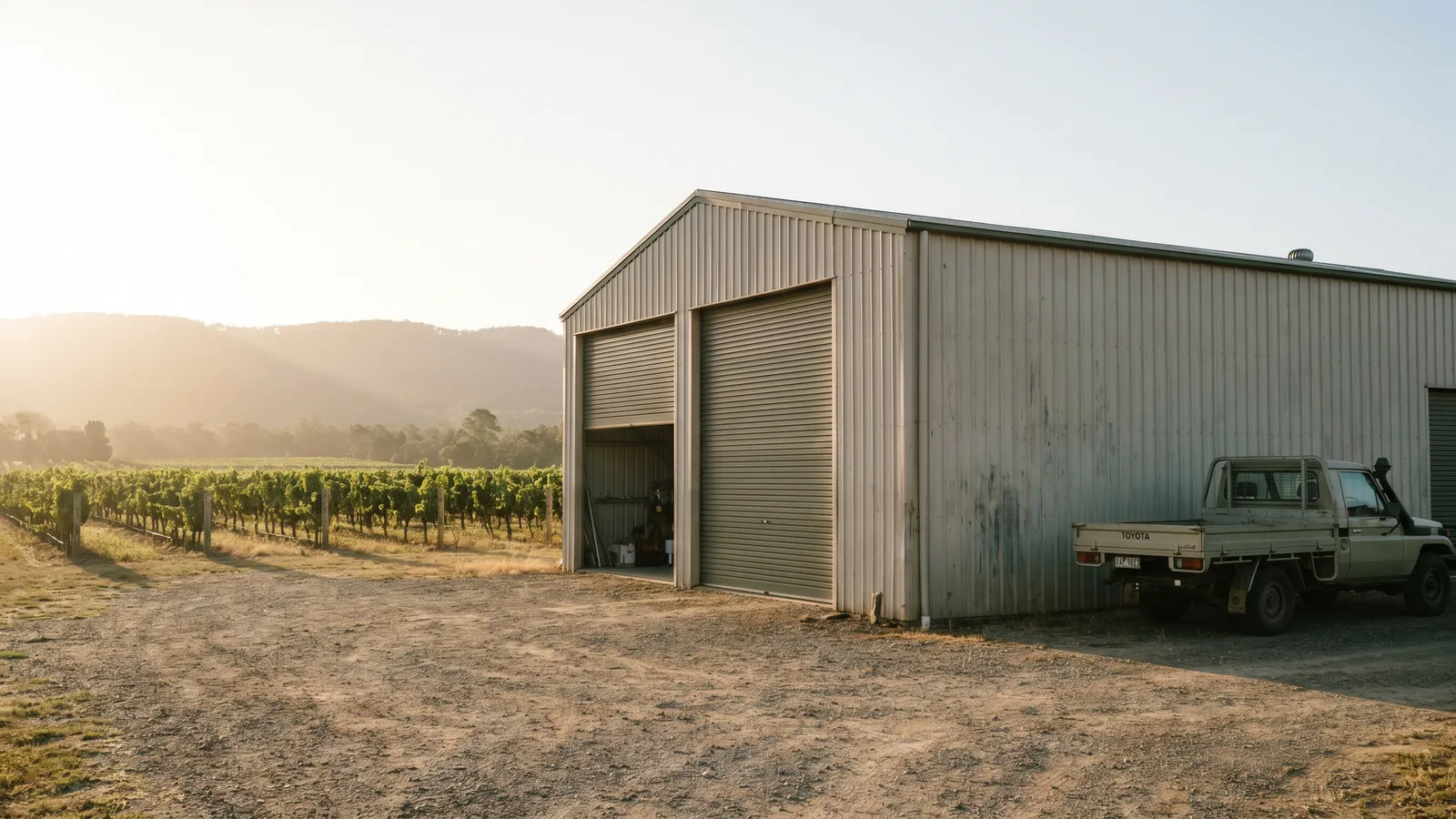
What we do on shed doors
- New roller doors on machinery sheds, hay sheds, workshops and barns, sized to the opening and the tallest thing that has to pass under it.
- Repairs on hard-worked doors: snapped springs, curtains out of their guides, bent bottom rails, doors that have dropped or racked with the shed.
- Servicing on a schedule, tensions checked, guides cleared of dust, seals and fixings gone over, so the busiest door on the place does not pick harvest week to stop.
- Motorisation of manual doors, where the drum and curtain suit it. Any mains wiring for an opener is done by a licensed electrician, confirmed on site as part of the quote.
The measurements that decide a shed door
Four numbers do most of the deciding, and we take all of them on site before quoting. If you want a head start, these are the ones to have handy when you enquire.
| Measurement | What it is | Typical range | What it decides |
|---|---|---|---|
| Span | Clear width of the opening | 3.0 to 5.0 m | Curtain gauge, wind bracing, whether one door or two makes more sense |
| Height | Clear height under the lintel | 2.4 to 5.0 m | Whether the header, a tractor cab or a raised tipper clears the opening |
| Headroom | Space above the opening for the rolled curtain | 450 to 900 mm | Drum size; whether the roll fits inside or needs a hood outside |
| Side room | Clear wall either side of the opening | 200 to 400 mm | Bracket and guide mounting, and where a motor can sit |
Duty: the number nobody measures
A house door might cycle three or four times a day. A machinery shed in work season can do ten or more, and a spring does not care how old it is, only how many times it has been wound and unwound. A standard torsion spring is rated around 10,000 cycles, so a door working ten cycles a day gets through in under three years what a quiet door takes a decade to do. That is why we ask about duty on every shed quote, and why cycle count beats age for deciding when a door needs eyes on it.
Dust, heat and the west wind
Out this way sheds live in dry, semi-arid country. Fine dust off gravel and worked paddocks packs into guides and bearings, dry heat perishes bottom seals early, and a wide door face takes real load when the westerlies come through. Wind rating matters on big spans; the honest way to handle it is on the measure, where the door's exposure can actually be seen, not with a rating claimed off a brochure.
If the shed door has jammed with gear inside: leave it where it sits. A wound spring or a loaded curtain holds serious stored tension, and forcing the door bends guides and rails that were repairable an hour earlier. Send the enquiry, tell us what is trapped, and it gets treated as the repair it is.
Asked across the ute tray
Can you match a door to the shed's colour?
Usually, yes. The major Australian door makers roll their steel in the standard Colorbond range, and we bring the colour question into the measure. Weathered cladding never matches a new door exactly, so we will show you the nearest options rather than promise a perfect match.
Do you do the whole property while you are out here?
That is the point of us. One visit can take in the machinery shed, the house double and the workshop roller. The Door Muster is the easy way to tally the lot before you enquire.
